3D-printed weapons used to sound like something out of a movie, but in Australia, they’ve become a real problem that police, lawmakers, and security agencies are dealing with more every year. As the technology becomes cheaper and easier to access, the country’s gun laws are being tested in ways they weren’t built for.
This topic isn’t just about gadgets or hobby printers. It’s about how fast technology is moving and how Australia is trying to keep pace with new threats that didn’t exist a decade ago.
Why 3D-Printed Weapons Are Getting More Attention?
For a long time, 3D-printed guns were seen as unreliable plastic toys that might fire one shot before breaking. That’s not the case anymore. Today, people can print strong parts, combine them with metal components ordered online, and build weapons that function much like traditional guns.
Police around Australia have reported regular seizures of homemade firearms, many of them built with printed parts. Some are simple pistols, but others are more advanced hybrid designs that work with standard ammunition.
This shift has pushed authorities to take the issue seriously because the barrier to entry is so low. A basic 3D printer from a normal electronics store is enough to start experimenting.

How Australia’s Gun Laws Are Being Tested?
Australia has some of the strictest firearms laws in the world, but those laws were created around conventional weapons. The idea that someone can download a file, print a frame at home, and order the remaining parts from different online shops raises challenges the law didn’t originally expect.
The biggest issue is that the law focuses heavily on physical possession of a firearm or gun parts. Digital files fall into a grey area in many states. Some parts of the country have clear penalties for possessing blueprints, while others don’t treat them as seriously, leaving room for exploitation.
Another challenge is enforcement. Traditional gun trafficking leaves more traces — serial numbers, import records, and physical evidence. A 3D-printed gun might be made start-to-finish inside a spare room. That means fewer signs for police to track, fewer records to follow, and a greater chance that unlicensed weapons circulate unnoticed.
Why Authorities Are Worried About This Trend?
A growing concern is the rise of “ghost guns.” These are firearms with no serial number and no official record. A printed weapon or a hybrid build instantly falls into this category. If a gun is used in a crime, tracing it becomes extremely difficult.
Some printed guns also use mixed components sourced from overseas, often bought in small quantities and disguised as harmless items. This makes it harder for border agencies to detect suspicious shipments.
Police have also said that people involved in drug crime or gang activity are increasingly interested in DIY firearms because they bypass the licensing system entirely. It’s not about hobbyists — it’s about criminals looking for tools that can’t be traced back to them.
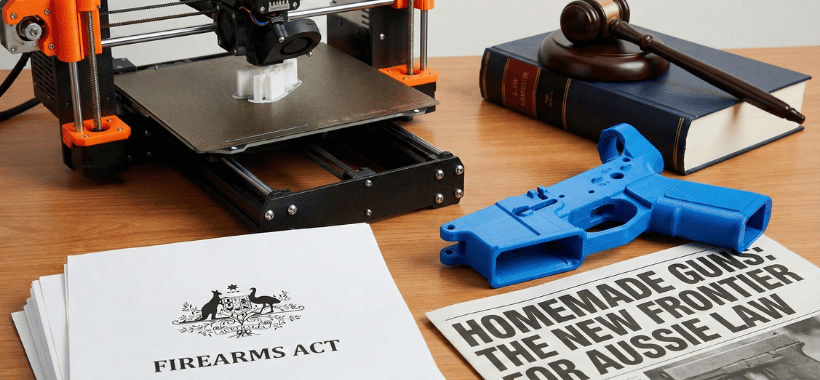
The New Reality: Technology Is Outrunning Regulation
One of the biggest differences between this issue and older gun-related problems is the speed of change. A new 3D printer model comes out every few months, allowing higher precision and stronger materials. Upgraded gun files spread online instantly.
Gun laws, on the other hand, take time to review, discuss, and update. This gap between fast-moving technology and slower-moving legislation creates openings that people can take advantage of. Australia is trying to close these gaps, but it’s a constant race.
Some experts argue that Australia needs a national standard for dealing with 3D-printed firearms instead of leaving each state to decide its own approach. Others believe the country needs more public awareness, so everyday people understand that printing a weapon isn’t just a “DIY experiment” — it’s a serious criminal offence.
What Could Happen Next?
As 3D printers become even more affordable, Australia will likely see more cases involving printed weapons unless stronger controls and clearer rules are introduced. Lawmakers may focus on:
- Placing heavier penalties on possession of digital gun files
- Tightening the rules around importing small components
- Giving police more authority to act when they suspect someone is printing weapon parts
- Creating national guidelines so every state handles the issue the same way
At the same time, technology experts believe that better scanning tools and digital monitoring systems could help detect illegal manufacturing earlier.
Final Thoughts
3D-printed weapons are no longer a rare novelty. They are shaping into one of the biggest challenges for Australia’s gun laws because they blend technology, privacy, and crime in a way traditional laws weren’t designed for.
As printing technology improves, Australia will have to adjust quickly to keep communities safe and prevent illegal weapons from spreading. This isn’t just a legal issue — it’s a technological shift that affects the whole country.